02 · Clinical evidence graph
Athena
A second opinion for rare cancers that cites its sources instead of guessing confidently.
See it
The problem
When an oncologist runs out of standard genomic leads, the tools left are search engines and chatbots. Neither tells you where a claim came from, and neither remembers what changed since the last tumour board.
Numbers, with dates
- 191 / 217nodes and edges of curated CIViC sarcoma evidence in the graph (2,712 nodes once ClinicalTrials.gov is added)counted on live CIViC data, 28 Oct 2026
- 1,388Python tests passing on our branch, plus 94 in the web clientrun 28 Oct 2026, after one real bug fix
- 13 in 4tumour-board subsystems across four pull requests, all still openPRs #128 to #132, checked 28 Oct 2026
How it works
- 01 · case
Start from the case
Gene, variant, cancer type and history become a query, not a prompt.
- 02 · graph
Pull a cited subgraph
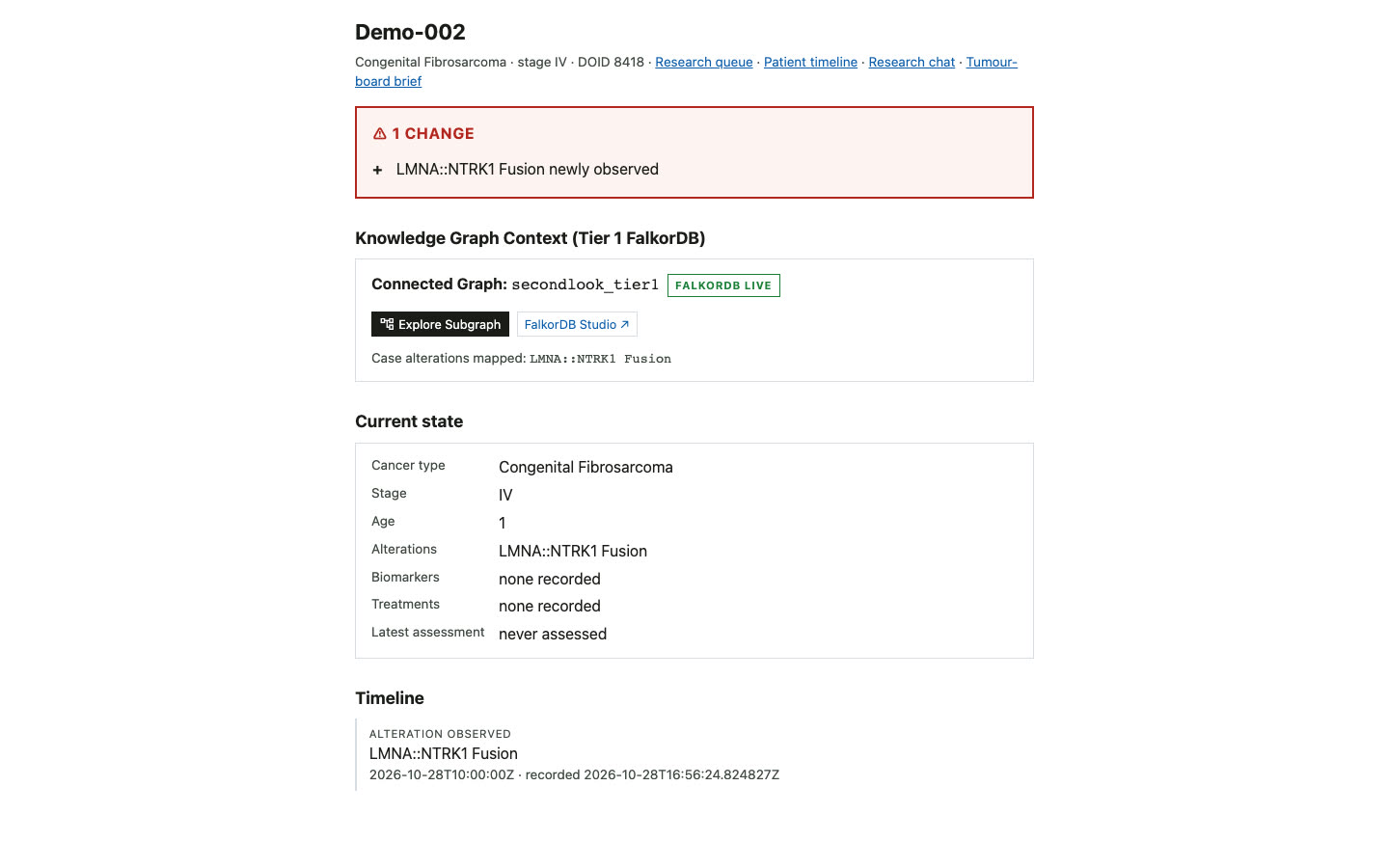
Cypher returns the evidence around the variant. Every edge carries the citation it came from.
- 03 · diff
Diff what changed
A new result is compared with the last state of the case; findings it contradicts are marked invalidated, not silently kept.
- 04 · board
Hand it to the board
The tumour board sees what is known, what changed and what is still unproven, in that order.
What I built
- A knowledge graph over CIViC and PubMed evidence in FalkorDB, queried live for a gene, a variant and a cancer type.
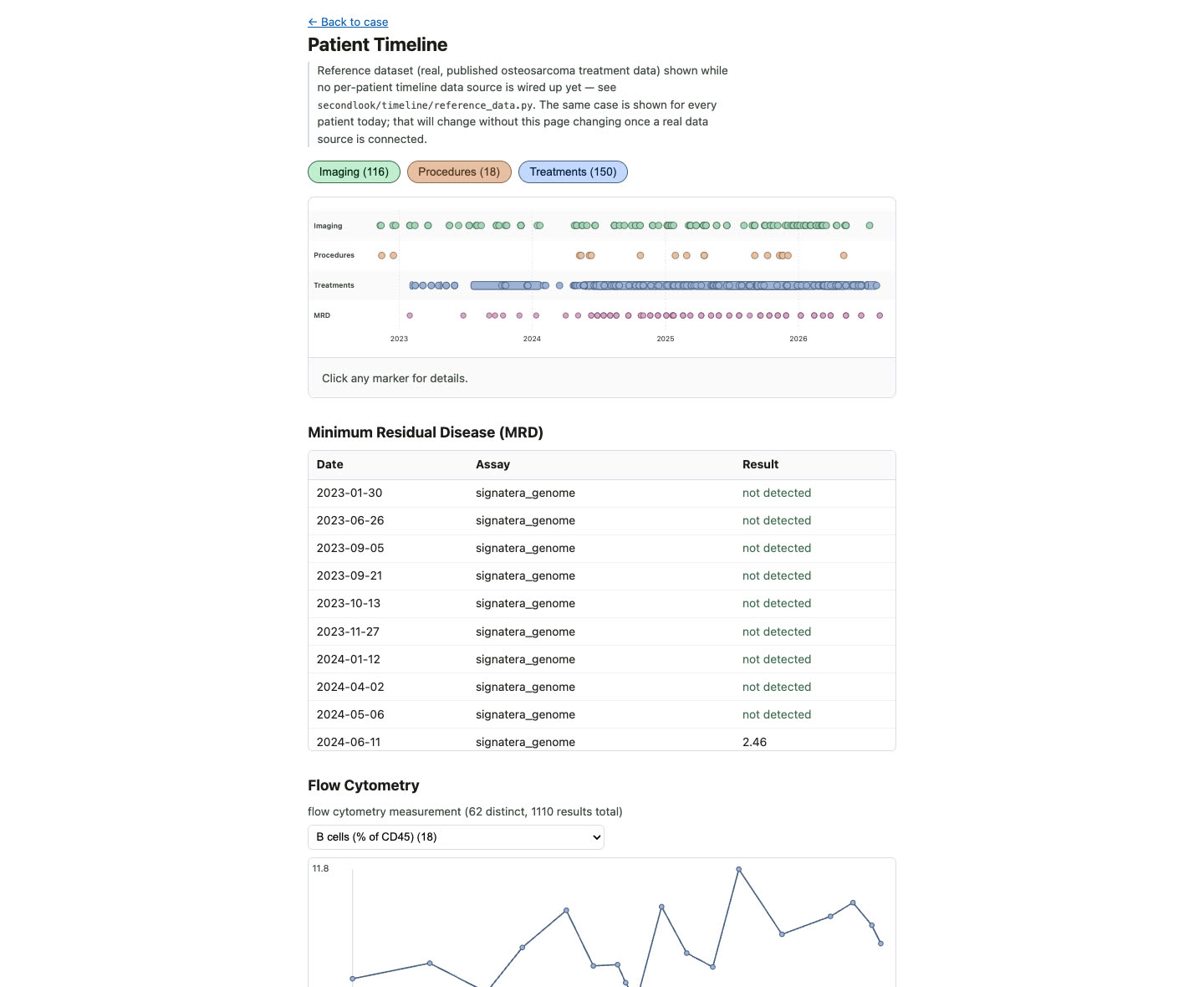
- Case memory that diffs new pathology, scans and labs against the last state and flags which earlier findings they invalidate.
- A structural-biology pipeline (docking, AlphaFold and AlphaMissense lookups) for cases where the evidence graph comes back empty.
Team
Built with the healers-second-look team. The repository credits everyone who worked on it.