03 · Forecast blending · Smart India Hackathon
WEAVR
Weigh every rainfall model by how much it has earned, region by region and lead by lead.
See it
The problem
India’s monsoon is forecast by a crowd of models, physics-based and AI. Each is good somewhere, at some lead time, for some kind of rain. Averaging them throws away what is known about each one.
Numbers, with dates
- 193 → 0false-zero probability cells after the extreme-value tail, at both the 115.6 mm and 204.5 mm thresholdstail-repair-results.md, PR #100
- 629tests passing, with lint and type checks cleanorg main, 28 Oct 2026
- 11of my pull requests merged; four more are openGitHub, 29 Oct 2026
How it works
- 01 · align
Put every model on one grid
Different resolutions, lead times and units become one aligned cube over India.
- 02 · weigh
Learn who to trust where
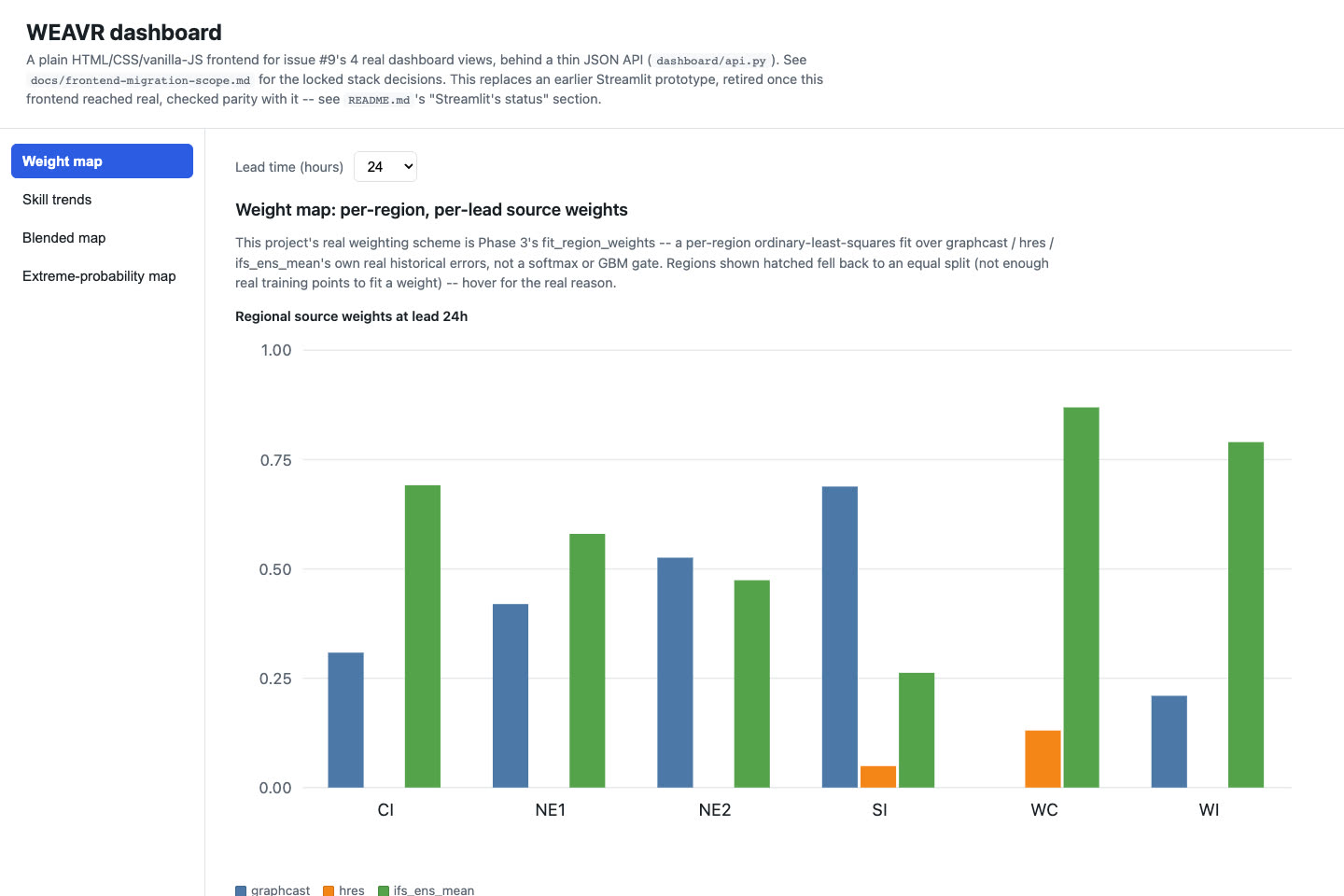
Weights are learned per region and per lead from history, not set once for the whole country.
- 03 · calibrate
Turn a number into a probability
Each calibration method is benchmarked against the last; it only ships if it wins.
- 04 · verify
Verify without leaking
The year being tested is never seen in training. Every claim in the README links to the run that produced it.
What I built
- A blend of GraphCast, HRES and the IFS ensemble on a common 0.25° India grid, weighted per region and per lead time.
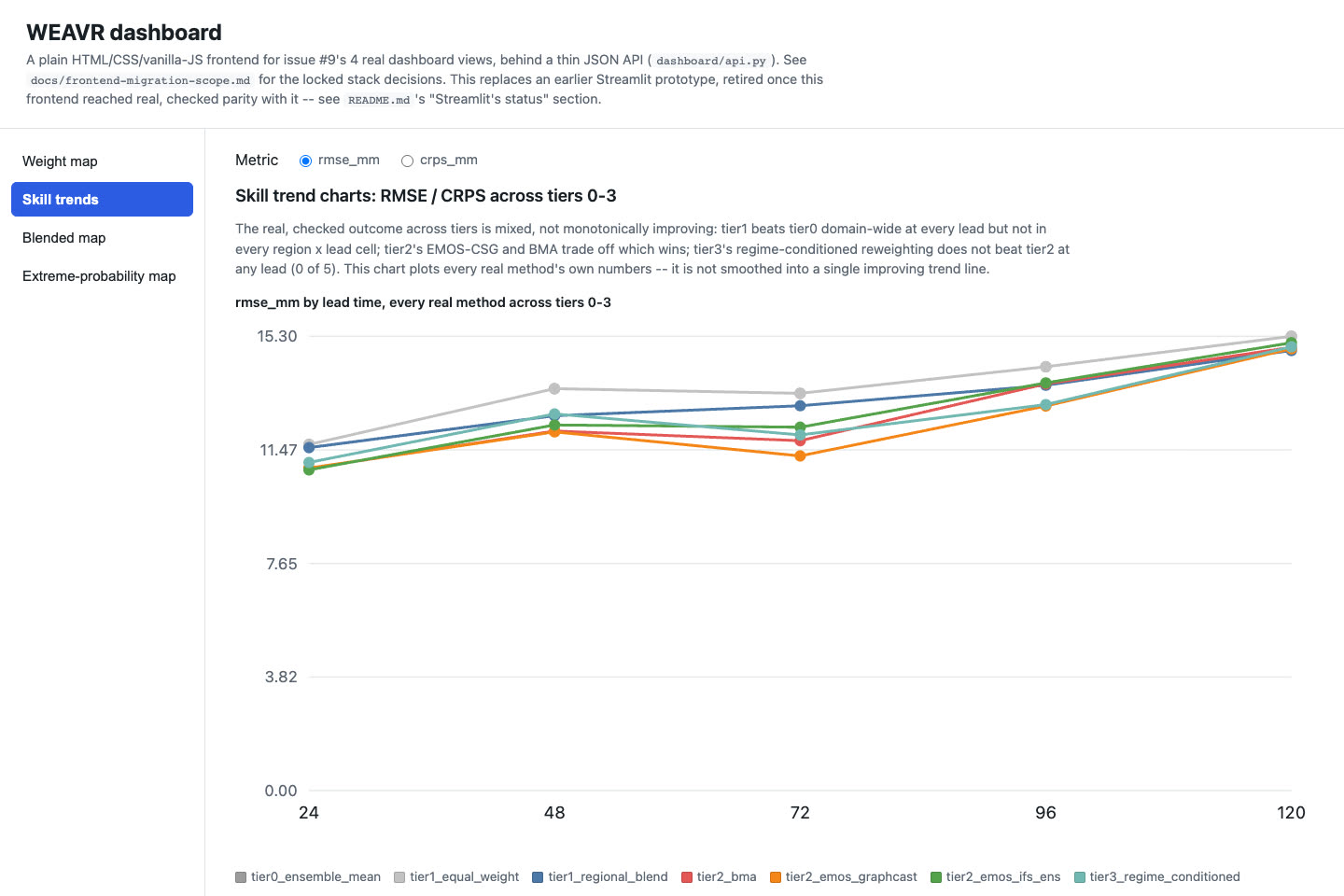
- A calibration ladder where each method has to beat the one below it: equal weights, regional weights, EMOS and BMA, then regime-conditioned.
- Probabilities at the rain thresholds IMD actually warns on, verified against rain-gauge analyses with a leave-one-year-out protocol.
Team
Built as a ATMOSYNC project. The repository credits everyone who worked on it.